
Abstract:
West Nile virus (WNV) is an emerging zoonotic arbovirus transmitted by a range of mosquito species, with Culex mosquitoes acting as a primary vector in European settings. Birds serve as the principal amplifying reservoir, with humans and horses as dead-end hosts. As WNV continues to expand its geographic range across Europe and into the United Kingdom, understanding the system-level consequences of vector control interventions is increasingly critical for public health planning.
Personal protection tools such as repellents are widely used to reduce human exposure to mosquito bites. However, in multi-host transmission systems, diverting mosquitoes away from one host type does not remove them from the system; they redirect to alternative hosts. In a zoonotic context, this raises an important and underexplored question: can interventions designed to protect humans inadvertently increase transmission in the reservoir population, ultimately elevating risk?
We developed a mathematical model of vectorial capacity that explicitly incorporates multiple host types (birds, humans and other mammals) alongside climate-dependent parameters governing vector biology and behaviour. Using this framework, we quantified the potential of vector-control to change the vectorial capacity for a range of intervention modes of action, including repellency, prolonged blood feeding inhibition, mortality before feeding and mortality after feeding, applied to each host type. We further developed target product profiles designed to minimise unintended consequences across the host system.
Our results demonstrate that repellent-based interventions acting on dead-end hosts can increase WNV vectorial capacity for the reservoir bird population by up to 23%, as displaced mosquitoes shift feeding to birds. This diversion effect amplifies infection prevalence in the reservoir, creating downstream risk for human populations. Critically, if a repellent product kills just 2% of mosquitoes prior to them locating an alternative host, the diversion effect is fully eliminated. This threshold provides an actionable target for vector control product development.
This work illustrates how a One Health perspective, accounting simultaneously for transmission dynamics across human, animal, and environmental components, is essential for designing interventions that are genuinely protective at the population level. Failing to account for multi-host dynamics risks optimising for individual protection while inadvertently undermining community-level disease control. Our modelling framework is generalisable and can be adapted to other vector-borne diseases characterised by complex host structures.
Biography:
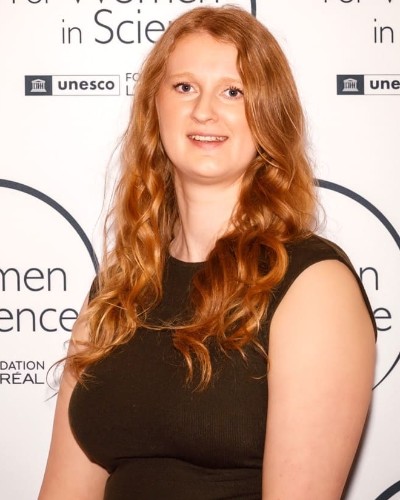
Dr Emma Fairbanks is a Research Fellow in Health Inequalities in the Department of Mathematics at the University of Manchester. Her research develops mathematical models and statistical inference frameworks for vector-borne diseases and vector control tools, with a focus on health inequalities and gaps in protection. She has worked across malaria elimination in Southeast Asia, UK arbovirus preparedness and zoonotic disease systems including West Nile virus.
