
Queensland Children’s Hospital, Australia
Abstract:
Healthcare systems face a dual and escalating challenge, delivering safe, high-quality care while reducing the environmental impacts associated with healthcare delivery. Infection prevention and control (IPC) practices are fundamental to protecting patients, healthcare workers and communities from infectious diseases. However, the widespread reliance on single-use personal protective equipment (PPE) and other disposable medical products contributes significantly to healthcare waste generation, carbon emissions and resource consumption. As health services seek to respond to the growing impacts of climate change, reconciling patient safety with environmental sustainability has become a critical priority for healthcare organisations worldwide.
Children’s Health Queensland (CHQ) has embedded sustainability as a strategic enabler of clinical excellence, recognising the intrinsic relationship between environmental stewardship, financial sustainability and patient outcomes. Through strong clinical leadership, governance frameworks and cross-sector partnerships, CHQ is advancing a model of clinical sustainability that empowers clinicians to drive change at the point of care. This approach moves beyond traditional waste management practices and focuses on optimising healthcare resources across their entire lifecycle, supporting circular economy principles, reducing unnecessary consumption and promoting equitable health outcomes for both current and future generations.
This presentation will explore CHQ’s integrated approach to balancing infection prevention requirements with environmental sustainability objectives. It will highlight initiatives designed to optimise healthcare supply chains, improve procurement practices and increase the recovery, reuse and responsible redistribution of medical resources. Particular attention will be given to innovative partnerships supporting the diversion of suitable end-of-life medical products from landfill, the development of research into medical plastics and resource recovery pathways, and programs that facilitate the donation of surplus medical supplies through international aid networks. These initiatives demonstrate how environmental sustainability can be embedded within existing clinical systems without compromising patient safety or quality of care.
The session will examine the major carbon hotspots within healthcare delivery, including procurement, single-use consumables, waste management and supply chain activities. Using practical examples from CHQ, attendees will gain insight into evidence-informed strategies that align with established IPC frameworks while reducing environmental impacts and generating financial benefits. Examples will include initiatives targeting PPE use optimisation, clinical waste reduction, product lifecycle management and sustainable procurement decision-making.
Importantly, the presentation will demonstrate how organisational leadership, workforce engagement and system-level reform can create the conditions necessary for sustainable healthcare practices to become routine and embedded within everyday clinical care. Attendees will learn how sustainability can be integrated into quality improvement, safety and operational processes rather than being viewed as a separate or competing priority.
The presentation will conclude by outlining a scalable and transferable framework that healthcare organisations can adapt to their own contexts. By showcasing practical, clinician-led solutions and measurable outcomes, this session will provide delegates with actionable strategies to reduce healthcare’s environmental footprint while maintaining the highest standards of infection prevention and patient care. Ultimately, the CHQ experience demonstrates that protecting people and protecting the planet are complementary goals, achievable through smarter resource use, stronger partnerships and a commitment to sustainable healthcare transformation.
Biography:
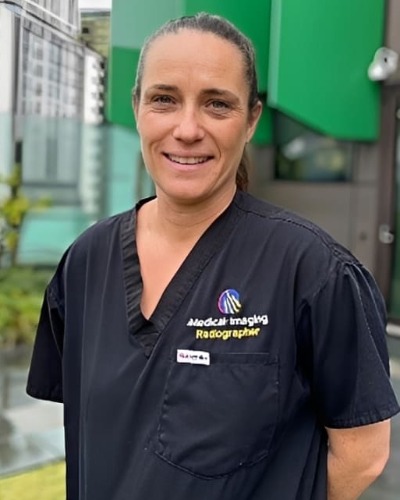
Renae McBrien is a radiographer and Sustainability Consultant at Children’s Health Queensland. She champions high-value, low-carbon healthcare, removing over one million plastic items and establishing 42 recycling streams. Recognised with the 2025 Brisbane Australia Day Sustainability Award, her work has featured on ABC’s War on Waste and earned multiple national awards.
