Abstract:
Democratic Discovery: Frugal Science and Community-Led Pathogen Surveillance
Background: Traditional models of infectious disease surveillance and science education often rely on top-down, resource-intensive frameworks that treat local communities as passive recipients of data rather than active participants. To address public health crises like Antimicrobial Resistance (AMR), there is an urgent need for decentralized, community-led approaches that foster cognitive sovereignty and localized action.
Methods: This study introduces and evaluates "The Neighbourhood Effect," a novel five-stage pedagogical and operational framework tested during an AMR and microscopy workshop series in Mumbai (n = 107). The framework utilizes low-cost, high-utility tools—specifically the Foldscope 2.0—to democratize scientific inquiry. Participant progression was tracked using mixed-method pre- and post-workshop surveys assessing socio-cultural identities, hands-on technical competence, conceptual misconceptions, and intent for community-led knowledge transmission.
Results: By grounding the curriculum in learners' lived experiences ("Their World First"), 98% of participants successfully transitioned from textbook learning to active exploration, with 86% independently preparing and mounting localized biological samples (skin, water, fabric). While post-session evaluations revealed persistent, deeply rooted systemic confusions—such as 63% conflating AMR with vaccine failure—the framework reframed these gaps not as failures, but as collective entry points for deeper engagement ("Honouring Confusion"). When prompted to contextualize AMR risks, participants bypassed abstract theory, mapping pathogen vulnerabilities directly onto local infrastructures, including Mumbai’s chawls, canteens, and municipal water systems. Remarkably, without external mandates or incentives, participants independently designed localized action plans, leveraging National Service Scheme (NSS) units to replicate the workshops and orchestrate grassroots community education on prudent antibiotic disposal.
Conclusion: The ultimate metric of One Health education and pathogen surveillance is not immediate classroom learning gains, but whether knowledge travels beyond the laboratory to catalyze decentralized action. By lowering technical barriers through frugal science and validating localized expertise, "The Neighbourhood Effect" transforms citizens into community knowledge-bearers. This framework offers a scalable, equitable blueprint for democratic, community-led bio-surveillance essential for mitigating global infectious disease threats.
Biography:
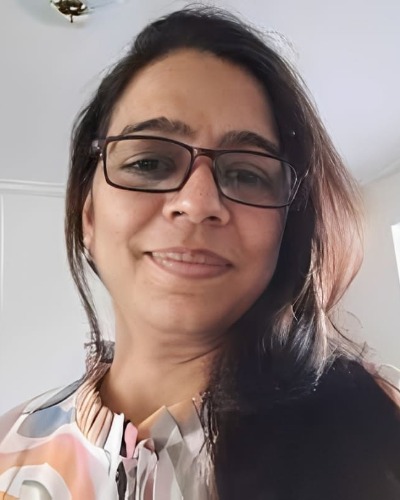
Dr. Anupma Harshal Wadavlikar is a Mumbai-based Biochemist, Foldscope International Fellow, and AMR Ambassador with over 24 years of experience in science education and outreach. Holding a PhD in Biochemistry from Mumbai University, she has conducted 350+ Foldscope-specific workshops across India, from government schools in Ladakh's Zanskar Valley and Arunachal Pradesh's remote northeast to gifted learner programmes at Ashoka University. She is a SaS (Superheroes Against Superbugs) Fellow, a Foldscope Instruments Inc. International Fellow (2024), and was named Foldscoper of the Month in June 2025. Her work, grounded in the philosophy of frugal science, uses the paper microscope to give children in low-resource settings their first encounter with the living microcosm beneath their feet: fungi, bacteria, plant cells, and insect wings. A former faculty member at KC College Mumbai and a current consultant with the Kotak Education Foundation and IISER Pune's COESME, Dr. Harshal has been supported by DBT, the Ministry of Science & Technology, UGC, and international science bodies. Her work reaches Grade 4 students through to postgraduate researchers across 14 Indian states.
